Common Mistakes in Travel Storytelling: 10 Pitfalls to Avoid
October 29, 2026 - Stories


October 29, 2026 - Stories
October 25, 2026 - Stories
October 21, 2026 - Photography
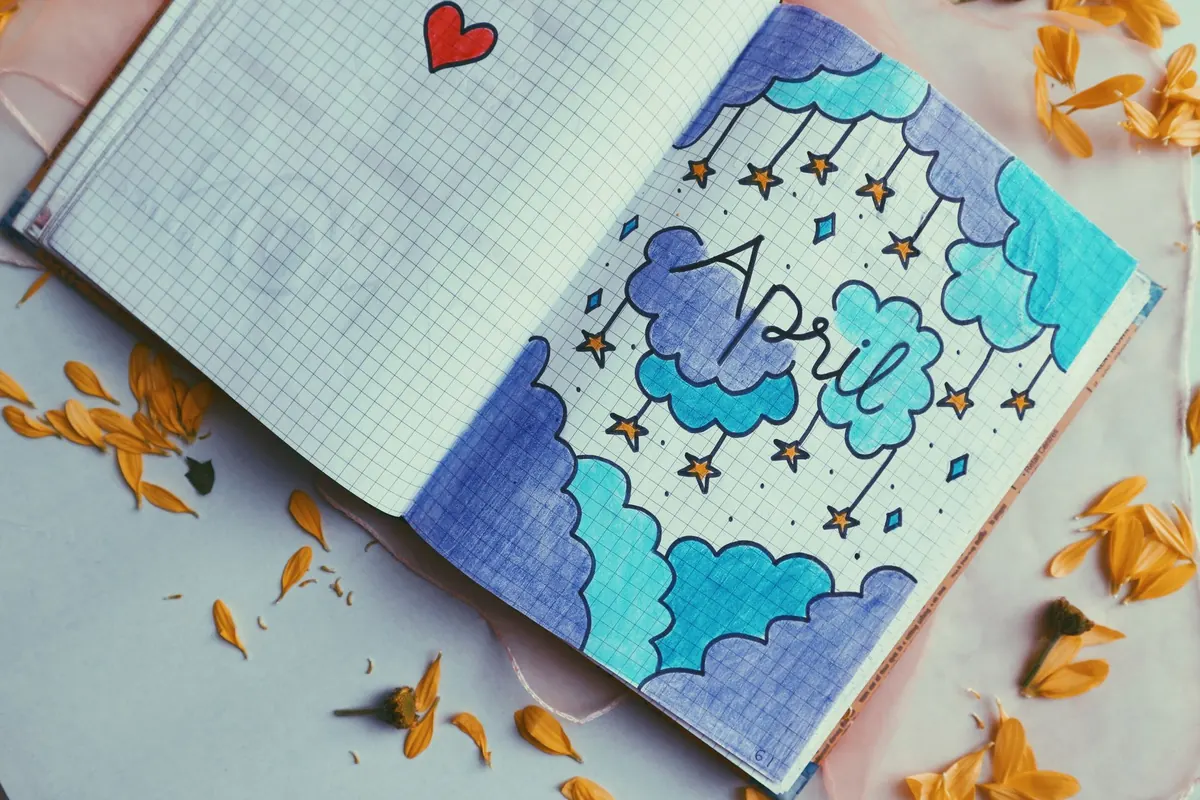
Most travel notebooks end up as a list of place names and a handful of adjectives. You flip back a year later and find "stunning view" written in three different countries, with nothing to explain what made any of them stunning. A nature journal works differently. It records the small, stubbornly specific things: the wind swinging round to the north at four in the afternoon, the smell of wet stone after a shower, the bird that woke you twenty minutes before your alarm. Those details age well. They bring the whole day back in a way a photograph rarely does.
A camera captures a scene in a fraction of a second, which is exactly the problem. You can take two hundred photographs in a morning and look at none of them again. A notebook slows you down. To write "the lake is the colour of weak tea and the far shore is lost in haze" you first have to stand there and decide what colour the lake actually is. That pause is the point.
There is a practical advantage too. Photographs are searchable by date and place; a journal is searchable by feeling. If you remember a trip as cold and quiet, you can flip to the page where you wrote about numb fingers and the crunch of frost and find the exact morning you mean. Two or three sentences of weather and sound will do more for your memory than a folder of files you never open.
The best kit is the one you never have to think about packing. Keep it in a side pocket permanently and the excuse of forgetting it disappears. You do not need much.
Watercolours are lovely and I would never talk anyone out of them, but they add weight, water and drying time. Pencil and a couple of colours will get you through a whole trip and still fit in a jacket pocket.
The temptation is to write a diary. Resist it. Prose takes time you would rather spend looking, and it tends to slide into summary. Instead, build each page from a few fixed elements that take under ten minutes to complete and give you far more to work with later.
Date, time, place, and a rough altitude or distance from the nearest village. This sounds dull until you are trying to work out which ridge you were on three weeks into a trip. Note the time you started and the time you stopped. Later, the gaps tell their own story.
Estimate the temperature rather than guessing precisely, and write the wind direction and what the sky is doing. "About 14 degrees, wind from the west, cloud building over the pass" is enough. Add the time whenever the weather changes, because weather is the one thing that shapes every other memory of a day outdoors.
You do not need a name to make a useful record. Write what the animal was doing, how many there were, how far away, and what you noticed first. "Small brown bird, striped flanks, tail flicking sideways, feeding on the ground under the second birch" is a better entry than a wrong identification. Look it up in the evening or leave the question open for years.
These are the senses travellers forget and the ones that resurrect a place fastest. Cicadas at siesta. Diesel and cut grass. The particular hush of a snowfield. One line each is plenty.
The woman who refilled your bottle at the gate. The dog that followed you for a kilometre. The two children arguing about whose turn it was to carry the goat. These fragments are what separate a nature journal from a field survey.
Almost nobody who keeps a nature journal can draw well, and it does not matter. A sketch is a looking tool, not a performance. A wobbly outline of a pine cone, labelled with the date and a note about how the scales felt, will hold a memory better than a careful photograph of the whole tree.
Start small. Give yourself ninety seconds and one subject: a leaf, a stone, the shape of a doorway. Draw the outline slowly, following the edge with your eye and letting the pencil follow. When you run out of confidence, switch to labels. Arrows and notes — "darker here", "grey-green, dusty underneath", "about the length of my thumb" — are entirely legitimate parts of a drawing and often more informative than the line work.
If the object defeats you, draw the space around it instead. Negative space is easier to see honestly than the thing itself.
Maps are the other underrated sketch. A quick plan of a valley with an arrow for the wind, a cross for where you sat, and a dotted line for the path you took will tell you more in five years than a paragraph of description.
Both improve with repetition, and both reward the traveller who stays in one place for a few days rather than moving every night. If you can, spend a week somewhere and record the same two or three observations daily.
For weather, note the sky at the same times each day — after breakfast and before dark is enough. Learn a handful of cloud names and use them: cirrus, altocumulus, cumulonimbus. Note which way the wind blows by wetting a finger and holding it up, or by watching smoke, grass or laundry. After a few days you will start to see patterns, and you will notice that you predicted the afternoon shower correctly, which is a quiet and disproportionate pleasure.
For wildlife, pick one patch — a hedge, a shoreline, a strip of scrub — and visit it at different hours. Record what appears and when. Dawn and the two hours before dusk are usually the busiest, and the middle of a hot day is often silent. Keep a running list at the back of the book, with a tick for each new species and a note of where you saw it. Over a single trip that list becomes a small, personal field guide to a place.
Here is a routine that fits into a coffee stop or the last twenty minutes of daylight.
Some days you will fill two pages and some days you will manage three lines from a bus window. Both count.
The habit usually survives the trip and dies in the first week back. Two small things help. First, write in fragments rather than sentences, so the barrier to starting stays low — nobody is grading this. Second, set aside half an hour at the end of each trip to read the whole journal through and add a short summary page at the back: the place, the people, the weather you will remember, the thing you would do differently. That page becomes the doorway back into everything else.
Finally, resist the urge to be precious about the notebook. Dog-eared corners, a coffee ring, a pressed leaf that has stained the page opposite — these are not damage. They are the reason a nature journal survives where a camera roll does not. Take the book everywhere, write badly, sketch crookedly, and let the place do the rest.
Photo: Bich Tran / Pexels
Ten habits that flatten travel writing, from postcard adjectives to missing stakes, each with a specific practical...
A working guide to coastal villages at first light: how fishermen, café counters, and shifting shadows shape a...
October 29, 2026 - Stories
October 25, 2026 - Stories
Copyright © 2026 Tracce Del Vento. All Right Reserved.